Tree with Bare Branches: A Designer’s Practical Review
I’ve spent years testing machine embroidery designs for client projects, small-batch production, and my own craft shop. When I first saw Tree with Bare Branches, I knew immediately it wasn’t just another generic forest silhouette. The linen texture styling, the deliberate spacing of the limbs, and the quiet confidence of a bare tree shape gave me a dozen ideas before I even opened the file. This review is not a basic product description. It’s what I’d tell a fellow designer or Etsy seller who needs to know if this design holds up in real stitching, on real products, with real customers.
First Impressions: The Mood of Bare Branches
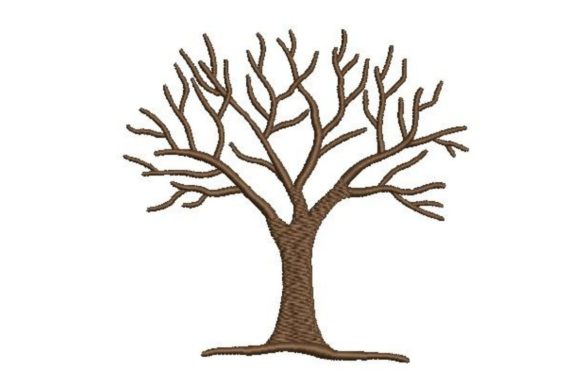
The design carries a distinctly organic, handmade feel. The Tree with Bare Branches reads as a thoughtful illustration rather than a stiff vector trace. The branches reach outward in a way that feels natural, not symmetrical or forced. That slight irregularity is gold for crafters who want their finished product to look like bespoke embroidery, not a mass-produced decal. The linen-inspired texture hinted at in the product description suggests a soft fill, almost like a woven fabric effect, which would make it stand out on cotton, linen, or even a heavier canvas.
From a branding perspective, this design fits the Forest category without feeling overly seasonal. Yes, bare branches can lean autumnal, but the refined linework keeps it versatile enough for year-round use. I can see it working beautifully on a spring tote when paired with soft pastel thread, or on a dark winter beanie with a silver-gray stitch. The absence of leaves means the designer gets to decide the story — and that’s a powerful creative tool.
Real Project: Planning a Custom Embroidered Tote
Let me walk you through a real scenario. A client recently asked for a personalized tote bag as a gift for a friend who loves woodland walks and minimalist decor. The tote needed to feel elevated, not craft-store cute. I considered several tree designs, but the Tree with Bare Branches immediately felt right. The layout, with its open branch structure, would sit beautifully centered on a 12×16 inch tote panel without overwhelming the negative space. That negative space is critical — it lets the embroidery breathe and makes the piece look professionally designed.
I planned to stitch it on a sturdy 10oz natural cotton canvas using a soft charcoal thread. The linen texture of the design would echo the fabric’s own weave, creating a seamless, almost printed look. I knew this wasn’t going to be a dense, stiff patch; it would have a delicate, airy finish that invited touch. In my mind, the recipient would see the tote and immediately think it came from a specialty boutique, not a machine in someone’s craft room. And that’s exactly the reaction we want to trigger.
Why This Design Works for Handmade Merchandise
If you’re selling at craft fairs, on Etsy, or through your own small shop, Tree with Bare Branches gives you a highly giftable asset. It’s neutral enough for baby blankets, rustically elegant enough for wedding handkerchiefs, and crisp enough for a men’s casual shirt pocket. The design doesn’t scream “cute” or “feminine” — it’s balanced. That means fewer customer objections about style and broader appeal across demographics. I’ve learned that a design with this kind of flexible personality usually sells faster and works in more product listings than something hyper-specific.
Technical Considerations for Flawless Stitching
Before I ever hoop a design, I assess what could go wrong. With a bare branch motif, the first thing I examine is the thickness of the smallest twigs. If they’re too thin, the stitch density might cause puckering on lightweight fabrics or break threads on high-speed machines. The product description didn’t provide stitch count or exact file details, so I strongly recommend testing this design on a scrap of the intended fabric first. Choose a fabric that closely matches the final product’s weight and weave. I’d also test on both light and dark backgrounds — the same thread color can look strikingly different on a deep navy versus a soft oatmeal linen.
Stabilizer choice is non-negotiable here. For a tote bag, I’d use a cutaway stabilizer to prevent distortion over time. For a T-shirt or sweatshirt, a no-show mesh stabilizer would keep the back soft while supporting the satin and fill stitches. If you’re working on a baby onesie or a thin knit, a water-soluble topper is essential to stop the stitches from sinking into the fabric pile. The open branch structure means less total stitch area, but that also means each stitch line is more visible. Any misalignment or puckering will be glaringly obvious, so slow down, use a sharp needle, and don’t skip the test run.
Where to Use It — and Where Caution Pays Off
Tree with Bare Branches shines on flat, smooth surfaces with moderate hoop access. Think pillow covers, tea towels, aprons, flat tote panels, and the back of a denim jacket. I’d be more cautious with curved surfaces like caps, especially if the design extends to the edges of the hoop. The branch tips might distort on the cap’s curve, creating a warped look. Also, avoid extremely small hoop sizes unless you’ve verified the design scales down without losing branch clarity. Tiny details that vanish into a blur of thread don’t impress anyone, and they can cheapen the entire product.
Washability is another factor. If the finished item will be laundered frequently — a kitchen towel, a baby bib, or a sweatshirt — I’d double-check the stitch density and consider a gentle wash cycle with a protective mesh bag. The design’s open nature means fewer thread breaks, but it also means any loose thread end is more visible. Secure those trims perfectly.
How Tree with Bare Branches Elevates Product Value
Let’s talk about perceived value. A bare tree design, when executed well, suggests thoughtfulness. It’s not a flashy, trendy motif; it’s a quiet statement. Customers who buy handmade goods often look for that emotional connection. A Tree with Bare Branches embroidered on a linen pillow cover tells a story of resilience, nature, and simplicity. That story lets you price higher than a generic floral or monogram. It also makes your product photos more compelling. In a mockup, the design’s silhouette works beautifully against varied backgrounds, and the linen texture adds depth that grabs attention in a crowded Etsy feed.
For embroidery designers selling digital files, this design is a strong asset. Its clean, scalable appearance works in printable mockups and previews, helping you attract buyers who want to see exactly how it will look on their own products. Just be sure to confirm the allowed uses in the license. If commercial use is permitted, you can confidently offer it to other small business owners. If not, clarify that it’s for personal projects only. Misunderstandings about licensing can damage trust fast.
Final Notes for Embroidery Designers and Sellers
Before you stitch Tree with Bare Branches on a customer order or list it in your shop, do a few quick checks. Verify the file format matches your machine’s requirements. Look at the stitch direction in the preview software — does the fill angle enhance the linen texture, or does it create odd highlight lines under certain lighting? Consider thread color choices carefully. I’d test a warm taupe, a soft moss, or even a muted denim blue to completely change the mood. And always, always keep a stitched sample on hand. When a customer asks, “What does this really look like?” you’ll have a real, tangible answer that builds trust instantly.
Overall, Tree with Bare Branches is a design that rewards patience and thoughtful placement. It’s not a slap-it-on-anything kind of graphic. It’s a piece that asks you to match the mood to the product, and when you do, the result feels like a custom commission, not just another embroidered item. That’s the kind of design that grows your reputation and keeps customers coming back.