Person with Prosthetic Legs: An Embroidery Designer’s Review
First Impressions and Visual Personality
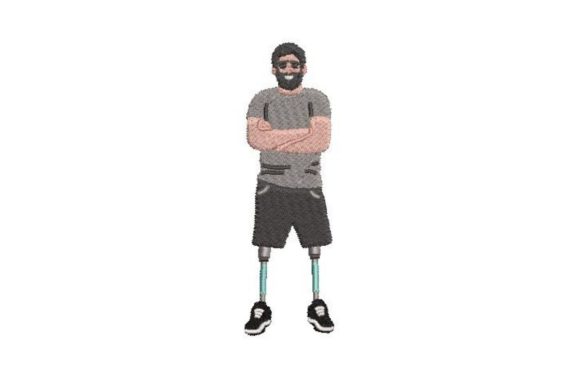
When I first saw the Person with Prosthetic Legs machine embroidery design, the immediate reaction was one of quiet confidence. The title alone, paired with the description about bravery and support, tells me this is a design built around a strong, meaningful message. It doesn’t rely on loud branding or flashy decorative elements. Instead, it feels clean, inclusive, and subtly powerful. For a small business owner, that’s exactly the kind of visual that turns a simple embroidered patch into a conversation starter.
Based on the theme and the Awareness category, I picture a silhouette or a stylized line art representation of a person in motion, with the prosthetic legs clearly visible. The design’s personality leans toward modern, friendly, and bold without being aggressive. It’s not a whimsical doodle or a rustic hand-drawn sketch; it’s the kind of graphic that reads as professional, purposeful, and carefully crafted. This makes it adaptable to a range of brand voices—from a cozy community café to a sports apparel label that wants to highlight resilience. At first glance, the Person with Prosthetic Legs embroidery file signals that the brand behind it believes in something bigger than just selling a product.
I always start my design evaluation by asking: “Would this look like a deliberate brand asset, or just a random decoration?” With this design, the answer is a clear yes to the former. The imagery itself is a commitment to inclusion and human strength, and that alone elevates it above generic decorative machine embroidery designs.
How This Design Performs as a Branded Embroidered Patch
As an embroidery designer, I’m always thinking about how a digital embroidery file translates to a finished product. The Person with Prosthetic Legs design has immense potential as a standalone embroidered patch. Patches are tactile, collectible, and offer a premium feel that direct-to-garment printing can’t match. When I consider this design sewn onto a classic twill base, it immediately becomes a wearable symbol of support. The prosthetic legs, if rendered with clean outlines and subtle highlights, can create a striking contrast that catches the eye.
For small business merch, an embroidered patch like this works on denim jackets, canvas tote bags, baseball caps, and even as a removable add-on for staff aprons. The key is scaling. I’d recommend testing the design at a minimum of 2.5 to 3 inches in height to preserve the details of the prosthetic limbs. If the design includes fine lines or small separations, shrinking it below that risks thread merging and loss of definition. On the other hand, as a larger back-of-jacket patch, the Person with Prosthetic Legs design would feel bold and impossible to ignore.
One thing I appreciate about awareness-themed embroidery files is that they often become best-sellers because they carry an emotional connection. A patch with this design isn’t just a fashion accessory; it’s a statement piece. For a boutique or an Etsy store, offering it as a limited-edition patch with a portion of proceeds going to a related cause can build enormous customer loyalty. The business case writes itself.
Ideal Placement for Small Business Merchandise
When I plan custom apparel for a brand, placement is everything. The Person with Prosthetic Legs design is versatile enough to live in multiple spots, but I’d prioritize these placements based on fabric type and customer perception:
- Chest logo accent: A left-chest embroidery on polo shirts, denim shirts, or lightweight jackets gives a polished, professional look. It’s subtle but clearly communicates the brand’s values to anyone who sees it up close.
- Apron embroidery: For a café, bakery, or florist that wants to blend warmth with advocacy, a centered apron placement or a left-side detail works beautifully. The design stays visible during customer interactions and reinforces the shop’s identity as a community-minded space.
- Tote bag design: A mid-sized placement on the corner of a canvas tote turns a simple carryall into a walking billboard for the brand’s message. Tote bags are often displayed during events, markets, and pop-ups, making this a high-impact choice.
- Cap embroidery: This is where I’d advise caution. The curved surface of a cap front can distort the human figure if the design is too tall or detailed. A flat-stitch patch sewn onto a cap panel might be the safer route. Always test on a real cap frame before committing to a bulk order.
- Sleeve detail: A smaller version of the design on a long-sleeve cuff or raglan sleeve adds a unique, discreet touch that feels intentional and modern.
For businesses that package their products with care, a tiny embroidered tag or label featuring the design on a fabric pouch or a garment hangtag can turn ordinary packaging into a memorable unboxing experience. The Person with Prosthetic Legs embroidery file gives you that flexibility.
The Effect on Brand Identity and Customer Trust
A brand’s visual assets are not just pretty pictures; they are trust signals. When a small business uses a design like Person with Prosthetic Legs, it immediately tells customers that the brand is attentive, empathetic, and aligned with real-world values. In a marketplace flooded with generic floral and monogram designs, this kind of embroidery file sets a business apart. It’s a quiet but effective differentiator.
I’ve seen craft businesses and handmade brands build entire product lines around a single meaningful symbol. This design could easily anchor a “Brave Collection” of shirts, scarves, and caps. Because it’s rooted in the Awareness category, it doesn’t feel trendy or fleeting. It feels timeless. Customers who see it on a staff uniform or a product label are likely to remember the brand and feel a deeper connection. That’s the kind of brand identity that turns a first-time buyer into a repeat supporter.
From a visual consistency standpoint, the Person with Prosthetic Legs design is clean enough to pair with minimalist typography or a simple logo. It won’t clash with existing design assets, and it stands on its own as a recognizable icon. Over time, that recognition builds equity. People will associate the outline of that figure with your business, and that’s a powerful branding tool.
Practical Embroidery Notes for Flawless Production
Before you send this digital embroidery file to your machine, there are a few designer-level checks I always recommend. These steps will save you from wasted materials and disappointed customers.
- Test in black and white first. Print the design on paper at actual size. If the silhouette and details aren’t clear in monochrome, they won’t magically improve with thread. This is especially important for the prosthetic legs—check that the separation between limbs and any inline details are distinct.
- Review thread color contrast. The design needs to pop against the garment fabric. If you’re stitching on a dark navy shirt, avoid dark thread colors that might blend. A bright, contrasting accent color on the prosthetic component can turn the design into a focal point. I’d suggest testing a few thread combinations on scrap fabric before the final run.
- Inspect spacing and underlay. Thin lines, like the contours of prosthetic blades or running prosthetic legs, can be problematic. Check if the embroidery file includes proper underlay stitches to stabilize the fabric and prevent gaps. If the spacing between elements is too tight, the threads might pull and distort the image.
- Confirm hoop size and file dimensions. While the product description doesn’t specify exact measurements, you must verify that the design fits within your hoop. Most small business machines handle 4x4 or 5x7 hoops, but a detailed figure might need a larger format. Always check the seller’s listed dimensions before purchasing.
- Use the right stabilizer for the fabric texture. For stretchy knits, a cut-away stabilizer prevents puckering. For woven canvas tote bags, a sturdy tear-away works well. If you’re stitching on denim or a thick cap, a medium-weight cut-away is your safest bet. Test on a real fabric sample that matches the final product.
- Create a printable mockup for client approval. Before you run a single stitch, place a digital version of the design on a photo of the actual garment. This step prevents miscommunication and ensures the placement and scale look right. It’s a small time investment that protects your reputation.
- Compare it beside other design assets. If you’re building a branded collection, stitch out the Person with Prosthetic Legs design next to your logo or other embroidery files. Check that the visual weight and style are cohesive. A mismatched set of designs can make your brand look amateurish.
Where to Use This Design Carefully
Even a great machine embroidery design has its limits. The Person with Prosthetic Legs motif, while strong, requires special attention in certain scenarios.
- Extremely small patch sizes: If you try to shrink this design to a 1-inch patch, the prosthetic details will likely blob together. Stick to at least 2.5 inches in height for a clean result.
- Cap fronts with high curvature: The human figure can warp unpleasantly on a structured cap. A flat patch sewn on or a cap-specific digitizing is highly recommended.
- High stitch density on lightweight fabrics: Too many stitches per square inch can cause puckering on thin cotton tees. If the file has a dense fill, test on a light fabric first and consider reducing density or using a lighter backing.
- Dark uniforms with low-contrast thread: If the design uses dark thread on a black apron, the message gets lost. Always plan for a contrasting outline or choose a lighter garment color.
- Frequent washing environments: For staff uniforms that go through industrial laundry, use polyester thread and a permanent stabilizer to prevent fading and fraying. A regular cotton thread might not hold up over time.
These aren’t deal-breakers; they’re just professional considerations that separate a successful commercial embroidery project from a failed one. The Person with Prosthetic Legs design is a stellar asset when you treat it with the respect it deserves.
Commercial Licensing and Final Checks
The product description ends with “This machine embroidery design comes wi,” which suggests the full licensing information is available on the listing. For any small business owner planning to sell finished products featuring this design, this is not a step to skip. Many digital embroidery files come with a standard personal use license, and you’ll need a commercial embroidery license to legally sell merchandise. Always read the seller’s terms carefully. If in doubt, reach out and ask. The last thing you want is a copyright issue after you’ve invested in thread, fabric, and production time.
I also recommend keeping a digital folder of your purchased embroidery files with their license details. This protects you if a customer ever asks or if you need to prove your right to use the design. For the Person with Prosthetic Legs design, the awareness theme makes it a prime candidate for for-profit merchandise with a portion donated to a related charity, but that’s only possible if the license allows it.
Final Thoughts for Crafters and Business Owners
The Person with Prosthetic Legs embroidery file is more than a pretty picture; it’s a ready-made asset for brands that want to align with courage, support, and human connection. Whether you’re a handmade shop owner stitching a few tote bags for a local market or an apparel decorator running a batch of staff aprons, this design offers a rare combination of emotional weight and visual clarity. It’s not the kind of design you hide in a corner—it’s meant to be seen, shared, and talked about.
From a technical standpoint, as long as you test the scaling, choose thread colors wisely, and respect the stabilizer and fabric combination, you’ll get a finished product that looks store-bought in the best possible way. The Person with Prosthetic Legs design is a smart addition to any small business’s embroidery collection, and I’m confident it will resonate with customers who value what it represents.