Giraffe Looking at the Trees: A Designer's Practical Review
When you see a design titled Giraffe Looking at the Trees, you get a very clear picture. It promises a scene, a moment of quiet observation. As someone who evaluates embroidery files daily for real client projects and my own handmade product line, my first question is always: does this design deliver on that promise in a way that translates beautifully to stitching?
The Charm of a Simple Scene
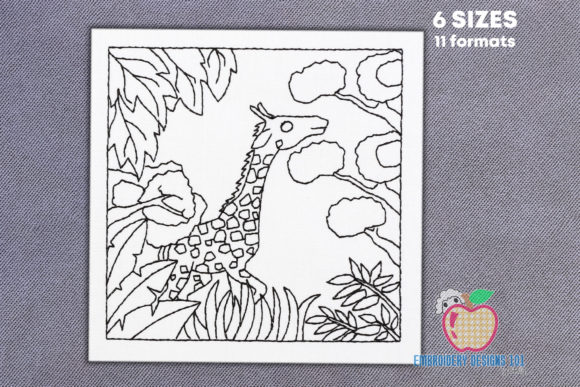
This wild animals design immediately strikes a mood of gentle curiosity and calm. The giraffe isn't in motion; it’s looking. That narrative simplicity is its biggest strength for embroidery projects. It’s charming without being overly cute, making it versatile across age groups and product types. The layout suggests a balanced composition, likely with the giraffe as the central focus and the trees providing a soft backdrop. This isn’t a hyper-detailed wildlife portrait; it’s a stylized, approachable illustration. That means it will stitch out cleanly without becoming a dense, time-consuming project, which is perfect for craft business items where efficiency and clarity matter.
Where This Giraffe Finds Its Home
I envision this design excelling on natural-textured canvases. Think of a cozy cotton tote bag for a book lover, or a soft sweatshirt embroidery for a nature-inspired brand. It feels inherently right for baby embroidery on a blanket or a romper—that peaceful, watching giraffe is a lovely nursery decor motif. As a personalized gift, stitched on a kitchen towel or a pillow cover, it adds a touch of handmade warmth without overwhelming the space.
Consider a real scenario: preparing a custom embroidered patch for a client’s child’s backpack. This design, with its clear shape and likely moderate stitch count, would produce a crisp, durable patch that tells a little story. For Etsy sellers and small shop product creators, it’s a strong candidate for a repeatable item—something you can confidently offer as a finished product knowing it will look consistent and professional every time.
Performance on Actual Products
On custom apparel like t-shirts, the success will hinge on fabric choice and stabilizer. On a standard cotton tee, it should stitch out beautifully. On thinner or more stretchy fabrics, you’ll need to be mindful. The design’s “simple and charming” description suggests it likely avoids tiny, intricate details that might get lost or puckered on challenging materials. For caps or curved surfaces, the overall shape seems conducive, but I’d always advise testing a single run on scrap fabric first to check for any distortion.
Its appeal on darker fabric backgrounds depends entirely on the thread colors used in the file. A design with good contrast will pop; one with similar tones might recede. Before committing to a holiday embroidery gift on a dark heirloom blanket, I’d stitch a sample. This step is non-negotiable for maintaining customer trust and professionalism.
A Note on Visual Impact and Value
This giraffe design enhances product value by offering a complete, thoughtful scene. It’s not just an animal outline; it has context. That extra layer makes the finished item feel more designed, more like a handmade product with intention. For buyer engagement in your Etsy listings or at craft fairs, that small story—a giraffe looking at trees—can be a charming point of description, making the item more memorable than a generic graphic.
Caution Zones and Designer Notes
While the description says it’s simple, we must interpret that as a relative term. Any design with elements like tree leaves or the giraffe’s spots has areas of potential density. On very small hoop sizes, those details could merge into a solid fill stitch area, losing definition. I would not automatically assume this is a perfect micro-design for a tiny baby bib corner without verifying the actual stitch density in the embroidery file.
For products requiring frequent washing, like aprons or tea towels, the integrity of the stitches is key. Using proper stabilizer and quality thread for this machine embroidery design will ensure it lasts. The “simple” nature is hopeful here—less complex stitching often holds up better under wear and laundering.
- Always test on scrap fabric first. Match the texture and weight to your final product.
- Check thread color contrast. Run it in a black and white mockup to see how the values separate. This tells you if it will work on both light and dark backgrounds.
- Review the actual stitch types. Is it primarily fill stitch for the body, running stitch for outlines? Understanding this helps you choose the right stabilizer and anticipate the feel on the fabric.
- Confirm licensing before selling. Whether you’re creating commercial embroidery projects or selling the digital embroidery file itself, know the terms. This protects your craft business.
Final Thoughts for Makers
Giraffe Looking at the Trees presents itself as a friendly, scene-driven asset. Its true test is in the hoop. For apparel decorators and creative entrepreneurs, it likely offers a reliable, attractive design that can become a staple in your collection for personalized products and boutique branding. It feels giftable, it feels commercial, and it carries the universal appeal of a peaceful wild animal moment. Approach it with practical preparation—test, stabilize, and choose your fabric canvas wisely—and this charming giraffe will look back at those trees perfectly on your finished work.