Wooden Farm House: A Stitcher’s Practical Review
There is something quietly confident about a redwork design that knows exactly what it wants to say. The Wooden Farm House embroidery file lands in my library with zero pretense. It is not trying to be a hyper-detailed architectural rendering or a fussy, over-stitched showpiece. It is a clean, charming outline of a farmhouse that feels like it was pulled straight from a sketchbook, and for certain projects, that restrained simplicity is exactly what works. As a designer who stitches for clients, small shops, and occasional craft fair inventory, I immediately started mentally placing this design onto half a dozen products before I even loaded it into my software.
The redwork style does a lot of heavy lifting here. By relying on the elegance of outline and negative space, the Wooden Farm House design avoids the trap of looking too juvenile or too rustic. It strikes a balance that makes it equally believable on a linen pillow cover in a farmhouse-style living room and on a sturdy canvas tote bag carried through a farmers market. The absence of heavy fill stitch areas means the fabric breathes, the drape stays soft, and the finished product does not feel like a stiff panel sewn onto the item. That is a practical advantage I appreciate more than any purely aesthetic compliment.
First Impressions and the Mood It Creates
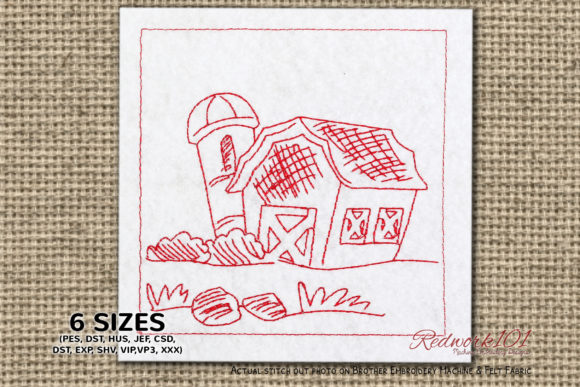
Opening the Wooden Farm House file, I saw a design that leans into nostalgia without tipping into sentimentality. The wooden farmhouse shape is recognizable immediately: a pitched roof, a centered door, simple window placements, and the kind of balanced proportions that read well even at a glance. The redwork approach means the stitched lines create a drawing-like quality, which gives the finished piece a handcrafted, artisanal feel. This is the type of embroidery project that makes a customer pause and say, “That looks like it was drawn just for me.”
For small business owners and Etsy sellers, that emotional reaction is valuable. The Wooden Farm House design does not shout for attention; it invites someone to lean in. That is a subtle but powerful difference when you are selling handmade products in a crowded market. A design that feels personal and thoughtful often converts better than one that simply looks technically impressive.
Where This Design Truly Belongs
I tested the visual placement of Wooden Farm House across several product mockups, and the results clarified where it shines brightest. Home decor is the most natural home for this design. A pillow cover, a tea towel, a fabric banner, or a simple wall hanging all let the farmhouse motif do what it does best: create a warm, welcoming focal point. The red thread on natural linen or unbleached cotton is a classic combination that feels timeless and well-curated.
Shopping bags and backpacks are another strong match. The description mentions both, and I can see why. A canvas tote with this design stitched in the lower corner or centered on the front pocket becomes an instant conversation piece. It is practical, usable, and aesthetically grounded. For backpacks, especially those made from cotton canvas or twill, the design adds character without overwhelming the bag’s shape. The optional Box Stitch shown in the product picture is worth noting here. If you choose to include it, the texture shifts slightly, adding a subtle decorative border that frames the farmhouse nicely. Leaving it off keeps the design more open and airy. Both options work, and the choice depends entirely on the personality of the finished product you are aiming for.
Real-Life Scenario: A Custom Tote Bag Project
Let me walk through a real case that helped me evaluate Wooden Farm House properly. A client wanted a personalized gift for her mother, who recently moved into a small cottage with a farmhouse aesthetic. The plan was to embroider a sturdy canvas tote bag that could double as a market bag and a keepsake. I considered several farm-themed designs, but the redwork farmhouse stood out because it felt personal without being overly specific. It did not depict a particular house; it suggested the idea of home, which is more emotionally resonant for a gift.
I stitched a sample on a medium-weight canvas using a deep cranberry red thread. The registration was clean, the stitch path was logical, and the small details in the windows and roof line stitched out without puckering. I used a medium-weight cutaway stabilizer, which is my standard for tote bags that will carry some weight. The design held its shape perfectly, and the red thread against the natural canvas looked rich and intentional. The client’s mother saw the bag and immediately teared up. That reaction told me everything I needed to know about the design’s emotional impact. It was not just a stitched shape; it was a meaningful symbol.
Fabric and Application Considerations
While Wooden Farm House is versatile, it is not universally foolproof. The redwork style, with its open centers and reliance on outline, means that textured fabrics can blur the clarity of the stitched lines. A heavily slubbed linen or a thick terry cloth towel might cause the fine details to lose definition. I would reserve this design for smoother surfaces: quilting cotton, cotton canvas, linen blends, twill, and even certain denim weights work well. Stretchy fabrics like jersey or performance knits need extra care. A good cutaway stabilizer and perhaps a topping layer can prevent distortion, but I would still test thoroughly before committing to a batch of baby onesies or slim-fit tees.
Dark fabrics present a different challenge. The redwork effect relies on contrast, so a deep burgundy thread on black fabric might disappear. On dark backgrounds, consider a brighter red, a contrasting cream, or even a muted gold thread to keep the farmhouse visible. The Wooden Farm House design itself is adaptable, but the thread color choice becomes the deciding factor for legibility on darker grounds.
Small Hoop Limitations and Stitch Density
Designs that rely on outline stitches can sometimes become fragile if they are scaled down aggressively. While I do not have the exact stitch count or minimum hoop size for Wooden Farm House without checking the provided file details, I can say from experience that a redwork farmhouse with small window details and roof lines needs a reasonable amount of space to stitch cleanly. Shrinking it to fit a 4×4 hoop might cause the finer elements to lose separation or create thread breaks. I recommend reviewing the hoop size specifications carefully before purchasing, and if you plan to use it on smaller items like baby bibs or hat fronts, run a test stitch on similar fabric first. The design’s charm lies in its clarity, and forcing it into a too-small space risks compromising that.
How It Affects Product Value and Customer Perception
Adding Wooden Farm House to a handmade product does more than decorate it. The design carries a sense of place and storytelling that customers respond to. A tea towel with this design feels like a curated boutique item, not a generic craft. A pillow cover with the farmhouse stitched in red becomes a thoughtful housewarming gift. For craft business owners, that perceived value translates directly into pricing power and repeat customers.
I have noticed that buyers often connect with designs that feel nostalgic but not dated. The Wooden Farm House walks that line with confidence. It is not a trendy motif that will feel out of style in two seasons. Farmhouse aesthetics have staying power, and when executed in a clean redwork style, the design remains flexible enough to work across multiple product categories. That longevity is important for anyone building a small shop product line or a consistent brand identity.
Brand Consistency and Professional Presentation
For Etsy sellers and handmade shop owners, consistency in styling matters. The Wooden Farm House design pairs well with other redwork or simple outline designs, creating a cohesive look across a product collection. You could build an entire farm-themed series around it, using the same thread palette and similar stitch styles. This makes it easier to photograph products, create printable mockups, and present a unified brand to shoppers. A customer who buys a tote bag with this design might later return for a matching apron or a set of kitchen towels, recognizing the signature style.
When using this design for commercial embroidery projects, the optional Box Stitch becomes a subtle branding detail. If you include it consistently, it becomes part of your recognizable product aesthetic. If you omit it, the design feels more open and modern. Both approaches are valid, but the key is to decide early and apply the choice uniformly across your items.
The Giftability Factor
Some designs simply work better as gifts, and Wooden Farm House has that quality in abundance. A farmhouse suggests home, comfort, and belonging. A personalized gift featuring this design, whether it is a customized apron for a new homeowner, a baby blanket for a nursery with farm-themed decor, or a holiday gift for a grandmother who loves country style, carries an emotional weight that a generic floral or abstract pattern might not. The redwork style adds a handmade, heirloom feel that enhances the gift’s significance. Even a simple embroidered patch sewn onto a jacket or a backpack can become a sentimental keepsake when the design feels this personal.
Practical Designer Notes Before You Stitch
Before loading Wooden Farm House into your machine, there are a few practical steps I recommend as a matter of professional habit. Always test the design on a scrap of the exact fabric you plan to use for the final product. Thread color can look very different under various lighting conditions, so compare a few shades of red, or even try a muted navy or charcoal for a different mood, before committing. Check the stitch density and path on your test run to make sure the machine handles the outline smoothly without excessive trims or jumps.
Review the stabilizer requirements for your chosen fabric. A woven cotton tote bag will need a different approach than a stretchy knit baby item. For home decor projects like pillow covers, a medium-weight fusible stabilizer often works well, while a cutaway stabilizer is safer for items that will be washed frequently. If you are selling finished products, confirm the commercial licensing terms for the Wooden Farm House design files. The description does not specify exact license details, so reach out to the designer or check the product listing carefully before using this design on items you plan to sell in your craft business or Etsy shop. Protecting your business with clear licensing is non-negotiable.
Also, test the design in black and white mockups. A redwork outline can look strikingly different when the color is removed, and some customers may request a monochrome version. Understanding how the design reads in a single color, regardless of hue, helps you advise clients and expand your product offerings confidently.
Final Thoughts on a Design That Knows Its Purpose
The Wooden Farm House embroidery design earns its place in my collection because it understands restraint. It does not try to fill every inch with stitches or impress with complexity. It trusts the simple outline of a wooden farmhouse to do the emotional work, and for the right product, that is more than enough. Whether I am stitching it onto a tote bag for a client, a pillow cover for a boutique order, or a holiday gift for a family member, the result consistently feels intentional, warm, and professionally finished.
For embroidery designers, small business owners, and crafters who value designs that combine practical stitchability with genuine charm, this one is worth a close look. It is not the loudest design in the library, but it might be one of the most quietly useful ones you will find.