A Delicate Redwork Design: Girl with Bare Back
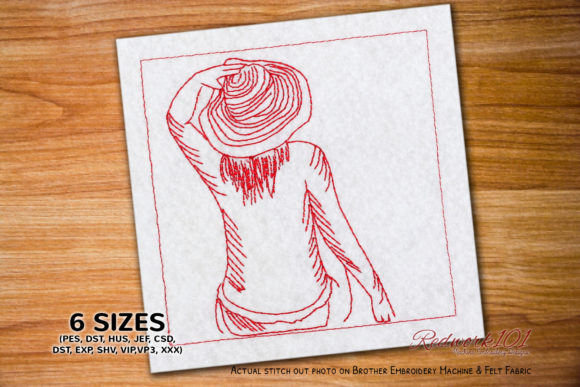
In the world of embroidery files, we often look for designs that have a clear purpose and an immediate emotional pull. Today, I'm looking at Girl with Bare Back, a redwork embroidery that immediately presents itself as a delicate, feminine sketch. My first impression is that this isn't a bold statement piece; it's a whisper. It carries a soft, almost nostalgic mood, with a simple line art style that feels both classic and gently modern. The shape is graceful, and the layout suggests it's meant to be a focal point, not a busy filler. This visual personality makes it a natural candidate for projects that benefit from a touch of understated elegance.
Where This Design Finds Its Perfect Home
When I consider real embroidery projects, I picture where this specific feeling would resonate most. Girl with Bare Back feels inherently suited for personalized gifts and boutique products where subtlety is valued. Imagine it stitched onto a linen pillow cover for a wedding gift, or delicately placed on the corner of a high-quality tea towel in a small shop collection. Its feminine touch makes it a strong candidate for baby items, like a simple outline on a heirloom blanket or a soft sweatshirt, provided the theme aligns. It could also bring a lovely, artistic flair to a tote bag for a creative friend or as part of a line of aprons for a craft business aiming for a gentle aesthetic.
For apparel decorators, this design asks for consideration. On a solid-color t-shirt or a lightweight sweatshirt, it would act as a refined accent rather than a loud graphic. In my experience, customers for handmade products often seek this kind of thoughtful, quiet design—it elevates a basic garment into something special without overpowering it. For an Etsy seller creating a series of embroidered patches, this could be a beautiful addition to a collection focused on artful sketches, appealing to buyers looking for something unique but not cartoonish.
Navigating the Practical Stitching Considerations
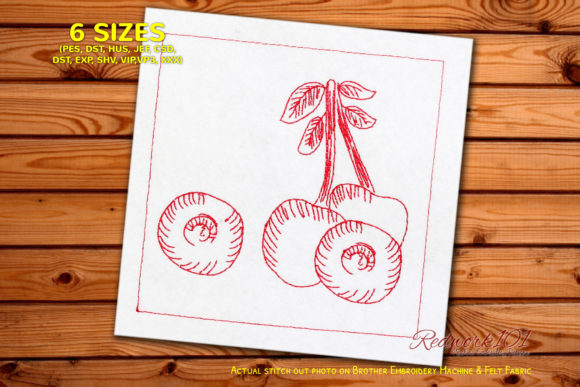
Moving from concept to hoop, there are practical realities every embroidery designer must address. The description notes the box stitch in the picture is optional. This is a crucial point for real-life application. That outer border could frame the design nicely, adding structure, but its absence allows the girl's figure to breathe on the fabric, which might be preferable for many projects. You must decide based on the final product's look.
Redwork, by its nature, often uses running stitch or a simple backstitch outline. This means stitch density should be manageable, but you still need to test it. On textured fabrics like some linens or on stretchy fabric like t-shirt material, a clean outline requires good stabilizer and careful attention to thread tension to keep those delicate lines crisp. On dark fabric, you'll need to ensure your thread color—likely a red or perhaps another chosen hue—has enough contrast to be clearly visible.
I would advise caution on very small hoop sizes. If the design has intricate details within the figure, shrinking it too much might lose that delicacy and turn lines into a blur. Always run a test on scrap fabric first. This is non-negotiable for professional work. Check how the small details, like the hair or the pose, translate into stitches. Does it retain its graceful feel? For curved surfaces like caps, the design's central, likely vertical orientation might work well, but again, a test run is your best friend to see how it conforms to the shape.
How This Design Influences Your Product's Appeal
The choice of an embroidery file directly impacts customer trust and your product's perceived value. Girl with Bare Back, when executed well on a suitable item, speaks to a handmade presentation that is intentional and artistic. It doesn't look mass-produced. This enhances brand consistency for a small shop that curates a gentle, feminine collection. For a personalized gift, such as a monogrammed pillow with this design, it increases the giftability—it feels considered and special.
From a commercial standpoint, using this design on products for your craft business requires you to confirm its licensing terms for finished product sales. Never assume. The description categorizes it under 'Boys,' which seems a clear mismatch for this design's described 'delicate, feminine touch.' This is a red flag to investigate further. Before using any digital embroidery file for commercial embroidery or selling digital product previews, you must verify the intended use and category to avoid issues.
Essential Designer Notes Before You Hoop
Here is my mental checklist before I would use this design for a client project or my own shop merchandise:
- First, test the design on scrap fabric identical to my final project fabric. Observe the stitch clarity.
- Check thread color contrast against both light and dark fabric backgrounds. Consider doing a black and white mockup to see the form without color bias.
- Review the actual stitchout for any overly dense areas or tiny corners that might pucker.
- Confirm the physical hoop size needed for the desired final size. Does it fit the project area?
- Decide on the optional box stitch. Does it enhance or constrain the design for my specific application—a tote bag, an apron, a kitchen towel?
- Use proper stabilizer for the fabric type to preserve those delicate lines.
- Critically, confirm the license allows for my use: personal, commercial, or as a design asset for printable mockups.
Embroidery is a blend of art and precision. A design like Girl with Bare Back offers a beautiful artistic foundation. Its success in a real project—whether a holiday gift, boutique nursery decor, or custom apparel—hinges on treating it as a technical file as well. By pairing its soft mood with practical stitching preparation, you create a finished product that feels both professionally crafted and genuinely lovely.