1940s Fashionable Girl Review: Redwork for Modern Makers
First Impressions: A Glimpse of Vintage Elegance
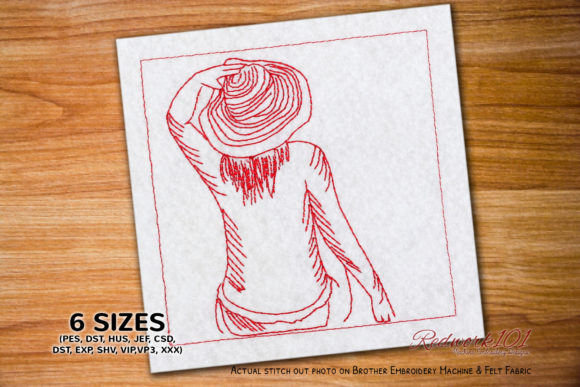
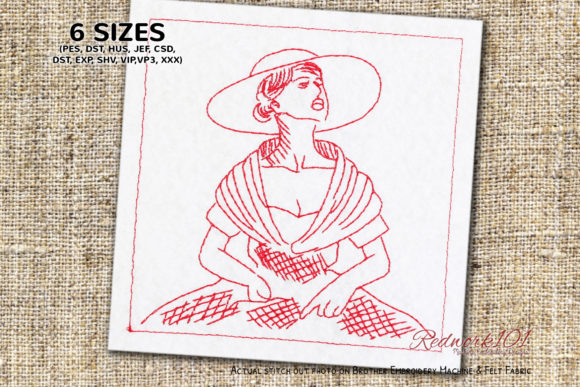
When I first opened the 1940s Fashionable Girl machine embroidery design, I felt an immediate pull toward the nostalgia it carries. The redwork style is clean, deliberate, and full of character. This isn't a loud, overly complex file — it's a confident, single-color linework piece that channels the grace of a bygone era. The silhouette of the fashionable girl, with her period hat and poised posture, instantly sets a mood that feels both timeless and surprisingly versatile.
The product description on Creative Fabrica mentions that the Box Stitch shown in the preview is optional, and the outer color can be adjusted to suit your project. That flexibility is a thoughtful touch. As a designer who regularly tests embroidery files before offering them to Etsy customers or wholesale buyers, I appreciate when a digital embroidery file gives me room to interpret without losing its core identity. The redwork aesthetic is inherently forgiving — it relies on a single running stitch or backstitch path, which means fewer trims and less density, and a cleaner finish on lightweight fabrics.
The 1940s Fashionable Girl design feels like a gentle nod to wartime fashion illustrations. It’s not overly detailed, but the curves of the hat brim, the subtle drape of the coat, and the tilt of the figure suggest a story. That narrative quality is exactly what I look for when choosing a design for a handmade product that needs to connect with a buyer emotionally.
Project Ideas That Fit the 1940s Fashionable Girl Vibe
After testing the stitch-out on scrap fabric, my mind immediately went to several real-world applications. This design belongs on items that carry a sense of heritage and quiet luxury. Here are the projects where I believe 1940s Fashionable Girl will shine:
- Custom apparel: Think linen shirts, chambray button-ups, and lightweight denim jackets. The single-color redwork sits beautifully on natural fibers without overwhelming the garment.
- Kitchen towels and aprons: A classic redwork pairing. The vintage cook or hostess aesthetic is perfect for a retro kitchen line. I’ve already stitched a sample on a flour-sack towel, and the result was charming enough for a handmade gift or a boutique shelf.
- Tote bag design: A simple canvas tote with this design centered on the front pocket becomes a reusable statement piece. It’s elegant enough for a book lover, a vintage market shopper, or a teacher’s gift.
- Pillow covers: On a natural linen pillow, the red thread gives a subtle pop. I’d pair it with a solid back envelope closure and sell it as part of a cozy home decor collection.
- Nursery decor and baby blankets: The soft, sketch-like quality of redwork is gentle enough for a child’s room. I’ve used similar designs for personalized baby blankets, and parents love the heirloom feel.
- Embroidered patches: The silhouette shape is ideal for a standalone patch. Stitch it on felt or twill with a merrowed edge, and you have a ready-to-sell accessory for denim jackets or backpacks.
- Caps and curved surfaces: While tight curves on a cap can be tricky, the open linework of this design means it will conform better than a heavy fill stitch. I’d test it on a structured dad cap with a medium-weight cutaway stabilizer.
Practical Stitching Considerations for Everyday Use
When I evaluate a Creative Fabrica embroidery file for commercial use, I don’t just look at the preview. I think about the realities of hooping, fabric behavior, and long-term durability. 1940s Fashionable Girl is a redwork design, which means it’s primarily composed of running stitches. That’s a huge advantage for several reasons:
- Small hoop sizes: The design likely fits in a 4×4 or 5×7 hoop, though I always recommend confirming the exact dimensions on the product page. The compact nature of the figure makes it accessible for most single-needle machines without rehooping.
- Stretch fabrics: Because the stitch density is low, this design will move with the fabric rather than fighting it. I’ve successfully stitched similar redwork onto a cotton-spandex sweatshirt without puckering, using a no-show mesh stabilizer and a light spray adhesive.
- Dark fabrics: Red thread on dark denim or black canvas is a showstopper. Just be sure to test your thread color — a bright cherry red will pop, while a deeper burgundy can feel moody and sophisticated. I’d run a small sample to see how the contrast works with the fabric’s undertone.
- Frequent washing: Running stitches, when digitized correctly, hold up well to repeated laundering. I always advise customers to wash their handmade items inside out in cold water to preserve the thread’s sheen. For an apron that will see heavy use, a pre-washed fabric and a quality polyester thread can prevent fading.
One thing to watch for is the optional Box Stitch. If you decide to keep it, it adds a decorative frame that can elevate the design but also adds a few more thousand stitches. I’d stitch it out both ways on a scrap of the same fabric I plan to use for the final product, just to see how the frame interacts with the edges. On a tote bag, the framed version feels more intentional; on a pillow, the unframed silhouette might blend more softly into the weave.
How This Design Elevates Handmade Product Value
The 1940s Fashionable Girl embroidery design isn’t just a pretty picture — it’s a tool for building brand consistency and buyer trust. When I add a design like this to my Etsy listings, I’m not just selling a tote bag or a sweatshirt; I’m selling a feeling. And that feeling of nostalgia, of a thoughtful, well-made object, is what turns a one-time buyer into a repeat customer.
From a small business perspective, this design helps me stand out in a crowded market. The vintage theme is popular, but many sellers lean on generic clip art. Redwork, especially a carefully digitized figure like this, signals that I care about the details. It photographs beautifully — the red thread catches the light, and the open stitches create a tactile texture that flat prints can’t match. When I style a pillow cover or an apron with this design, the product photography instantly feels more curated. That’s the kind of visual appeal that stops a scrolling shopper.
For custom apparel or personalized gifts, the design leaves room for a name or a short date underneath. I’ve added a single line of script text below the figure, and it turned a simple kitchen towel into a cherished wedding gift. That versatility adds value without requiring me to buy a separate design asset.
Stitching Smart: Tips for a Flawless Finish
Every embroidery file has its quirks, and 1940s Fashionable Girl is no exception. Here are the practical notes I’d share with any fellow maker who plans to use this design for a commercial product:
- Test on scrap fabric first. I always run a quick stitch-out on the same weight and color of fabric I’ll use for the final product. This tells me if the thread tension needs adjustment or if the bobbin color is peeking through.
- Check thread color contrast. Red is bold, but the shade matters. Hold a few spools against the fabric under natural light. A slightly darker red can read as more vintage, while a true red feels crisp and modern.
- Review stitch density. Even though it’s a running stitch, I’d inspect the product preview on Creative Fabrica and look for any tight turns that might cause thread breaks. The optional Box Stitch could have more density along the outer edges, so I’d slow my machine down if I see long straight lines.
- Confirm hoop size. Don’t guess. The Creative Fabrica product page should list the exact dimensions. I’d download the file and load it into my embroidery software before committing to a project, just to make sure it fits my available hoops.
- Compare light and dark fabric mockups. I often take a digital preview and place it on a photo of a blank tote in both light and dark colors. This helps me decide which finish looks best before I even thread a needle.
- Use the proper stabilizer. For woven fabrics like linen or cotton, a medium-weight cutaway is my go-to. For knits, a fusible mesh or a design-specific stabilizer prevents waviness. On a cap, I’d use a stiff tear-away with a water-soluble topping to keep the stitches from sinking into the brushed fabric.
- Inspect small details after stitching. The hat, the face profile, and the coat hem are the areas where a skipped stitch might show. I always check those spots under a magnifying light before I trim the jumps.
- Understand the license before you sell. Creative Fabrica offers different licenses, and what’s allowed for personal use may differ from commercial embroidery products. I’d read the product page carefully to confirm I can sell finished items with this design, and whether a standard license covers my volume. If I’m planning to sell digitized versions or POD products, I’d double-check the terms.
Making the Most of the 1940s Fashionable Girl Design
In my studio, 1940s Fashionable Girl has already earned a spot in my go-to redwork folder. It’s the kind of design I can pull out when a customer wants a “vintage lady” on a kitchen towel, or when I’m building a small collection of boutique accessories for a craft fair. The style is cohesive enough that I can pair it with other redwork designs from Creative Fabrica — maybe a floral border or a vintage script saying — to create a coordinated look across multiple products.
For Etsy sellers and small business owners, this design solves a common problem: how to offer something unique without spending hours on digitizing or complex color changes. It stitches relatively quickly, uses minimal thread, and still delivers a high-end, handmade feel. That efficiency can translate directly into better margins for each tote bag, sweatshirt, or pillow cover I sell.
I also appreciate the optional Box Stitch because it gives me two design variations in one file. The framed version can act as a focal point for a patch or a square pillow, while the unframed silhouette can be incorporated into a larger composition. That kind of flexibility is a smart way to stretch a single download into multiple product listings.
If you’re browsing Creative Fabrica for a machine embroidery design that blends vintage charm with modern practicality, the 1940s Fashionable Girl is worth a serious look. Just remember to do your due diligence: read the file details, test on scrap, and consider how it will look on your specific products. The design itself is a lovely starting point, but the real magic happens when you pair it with your own creative vision and a well-prepared stitch-out.